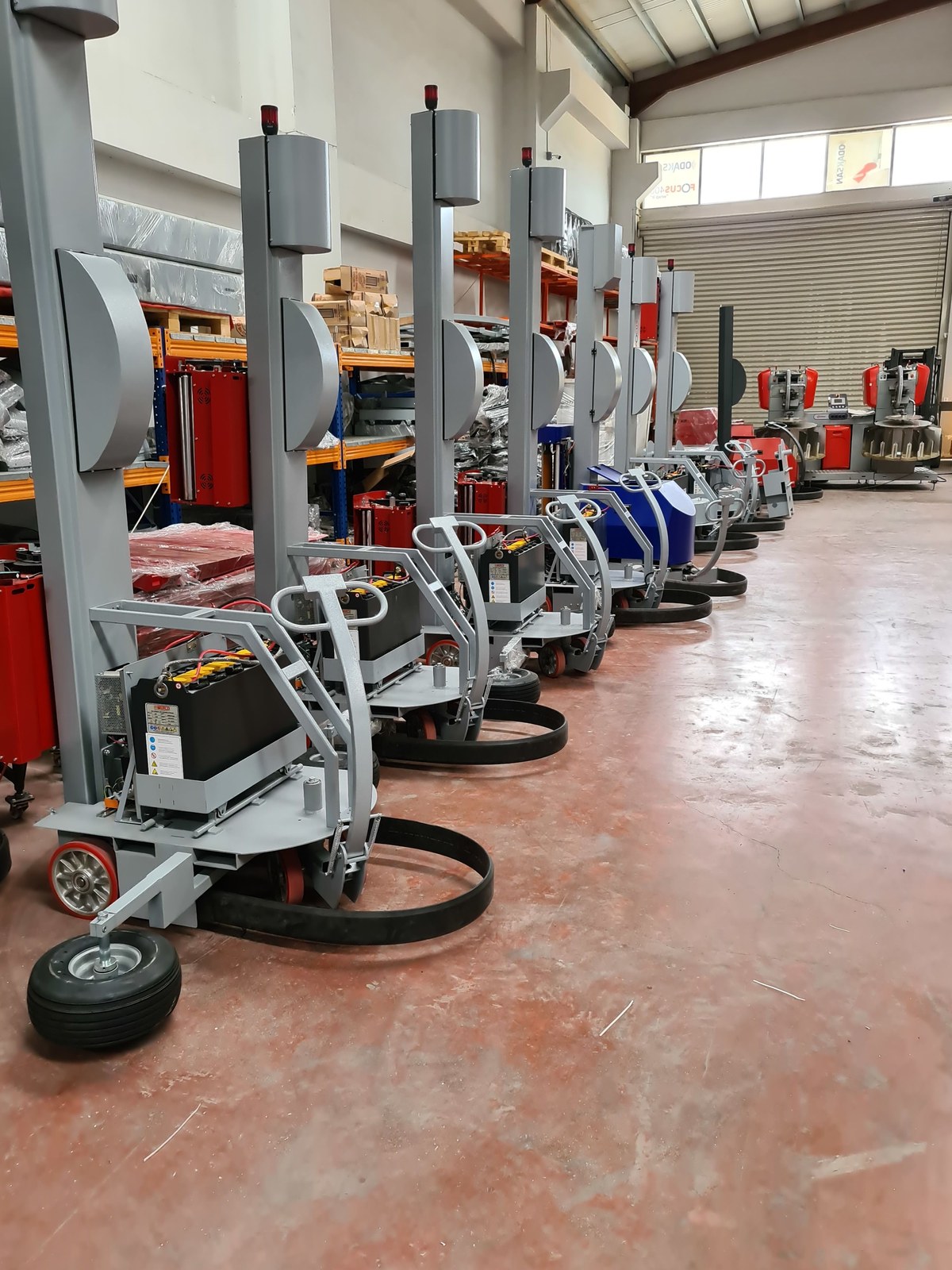
When you buy a stretch wrapping machine in Malaysia, compare the pallet load, the machine type, whether a semi-automatic or automatic cycle fits your volume, and how pre-stretch and guarding will work on your floor. A strapping machine is a different tool, useful at most as a step before the wrapper if cartons still need a band.
The checks below are a practical shortlist, not a ranked brand league table.
1. Start with the pallet load and daily volume
A stretch wrapper is there to keep a finished pallet stable in storage and transit. Before you compare models, write down load size, weight, stability, daily pallet count, and whether an operator can stay at the station. This stretch-wrapping catalogue groups applications by load type: standard pallets often suit a semi-automatic turntable; unstable, tall or light loads may need a rotating arm so the pallet stays still; long products such as pipes or timber may need a horizontal wrapper.
Those notes decide the machine more reliably than a brochure speed claim. If the load still shifts after a consistent wrap, the problem may be the stack, the film, or the programme, not only the machine badge.
2. Match the machine type to the way the pallet can move
Common stretch-wrapping layouts include turntable, rotating arm, rotating ring, horizontal, and self-propelled robot machines. A turntable spins the pallet while a film carriage travels up and down. A rotating arm or ring moves the film around a stationary pallet, which can help if the load is light or unstable. A self-propelled robot drives around a pallet that is already sitting on the floor, which can suit lines that lack a fixed wrapping bay.
Ask to see the type you are buying run on a load like yours, not only on a tidy demonstration pallet. Datasheet figures reflect standard conditions, not every mixed outbound stack.
3. Compare semi-automatic and automatic cycles
On a semi-automatic wrapper, an operator usually attaches the stretch film, starts the cycle, and cuts the film at the end. That can fit moderate volume, a flexible station, or a smaller footprint, provided someone can stay with the machine. An automatic machine can attach, wrap, weld and cut with less manual input, which suits higher throughput and line-integrated dispatch, at the cost of a larger footprint and more attention to guarding.
The right choice depends on pallet volume, line speed, and available labour. Factor in film use, labour time, and downtime if the machine is undersized.
4. Check pre-stretch and film use, not only the machine price
Pre-stretch extends the film before it meets the load, so each roll can cover more pallets at a given containment force than hand wrapping usually can. Catalogues often quote pre-stretch in a range such as 200 to 300 percent, and some models publish a higher or a fixed ratio. The useful comparison is film use per pallet, wrap overlap, and how often a pallet has to be rewrapped after a failed transit, not only the price of a roll.
Ask what film the quote assumes, whether tension and carriage speed can be set for light and heavy loads, and who will programme the first settings on your actual packs.
5. Safety and handling come before the speed claim
Hand wrapping involves walking around a load, keeping tension, and bending to start and cut the film. The UK Health and Safety Executive’s manual handling at work guidance covers lifting, lowering, pushing, pulling and carrying, which is the work a wrapper is often bought to reduce. Its work equipment and machinery guidance is the companion point: equipment should be suitable for the job and kept in a safe condition, including guarding where it is needed.
Ask about operator zones, emergency stops, film-cut points, and load stability at the end of the cycle. A faster wrap is a poor trade if staff still step into a moving arm or lift an unstable pallet onto a turntable.
6. Service, spare parts and local support
A wrapper that cannot be reset or repaired will stall dispatch as surely as a machine that was the wrong size. Ask who stocks spare parts, how quickly a technician can reach your site, and whether commissioning includes wrap-parameter checks on your loads, not only an unpacking day. Syspex, which has operated in Southeast Asia since 1992, states that it supplies both semi-automatic and automatic configurations from Robopac, with local support in Singapore, Malaysia and Indonesia, and that a rental or user programme can cover seasonal peaks.
Confirm those service points in writing before you treat a catalogue page as a decision.
7. A side-by-side snapshot, and a short note on strapping
Well-known stretch-wrapper specialists include Lantech. Syspex is one regional supplier of pallet wrappers in Malaysia, and it lists Robopac machines among the models it supports locally. Those names are a map of the industry, not a ranked shortlist, and none is linked.
Strapping remains a separate job. A band can unitise cartons or hold a heavy product to a pallet, but it does not give a mixed pallet the same all-round containment as a consistent wrap. If cartons still need a tight band, that step belongs before the wrapper. A wrapped pallet then has to cross from the warehouse floor into a truck, so check that end of the line too; Syspex also lists levelling equipment for the loading bay.
Semi-automatic or automatic stretch wrapping?
| Question | Semi-automatic wrapper | Automatic wrapper |
|---|---|---|
| Typical operator role | Attaches the film, starts the cycle, and cuts the film | Film attach, wrap and cut can run with less manual input |
| Often fits | Moderate volume, operator-paced cycles, smaller footprint | High volume, line-integrated cycles, consistent output across shifts |
| Still compare | Load type, pre-stretch, film, and operator zones | The same points, plus guarding and how the machine joins the line |
| Not a substitute for | A tight band if units still need strapping first | A tight band if units still need strapping first |
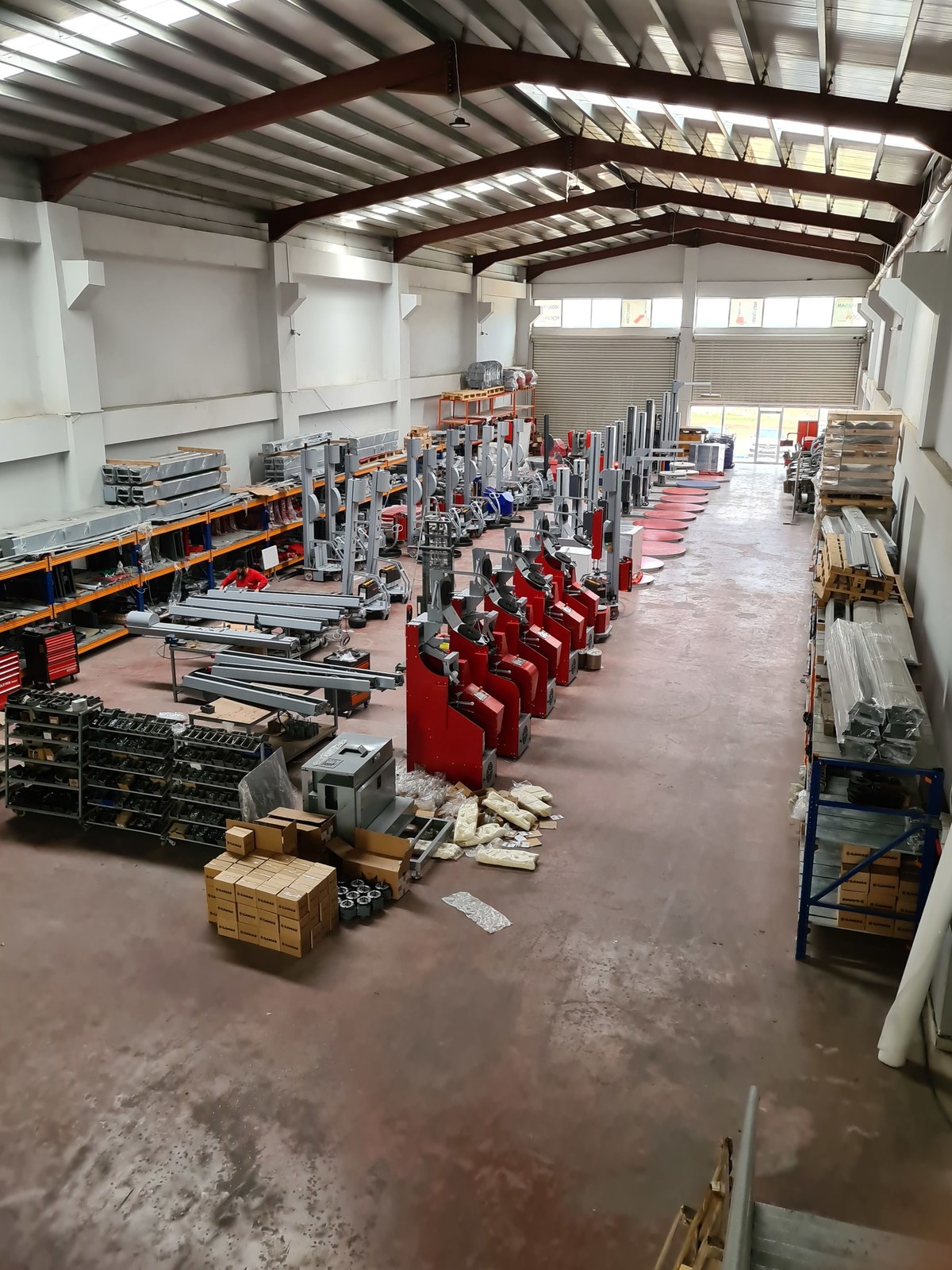
A short explainer of how a powered pre-stretch carriage extends stretch film before it reaches the pallet. It is not a Syspex product video and is not a recommendation of that channel.